
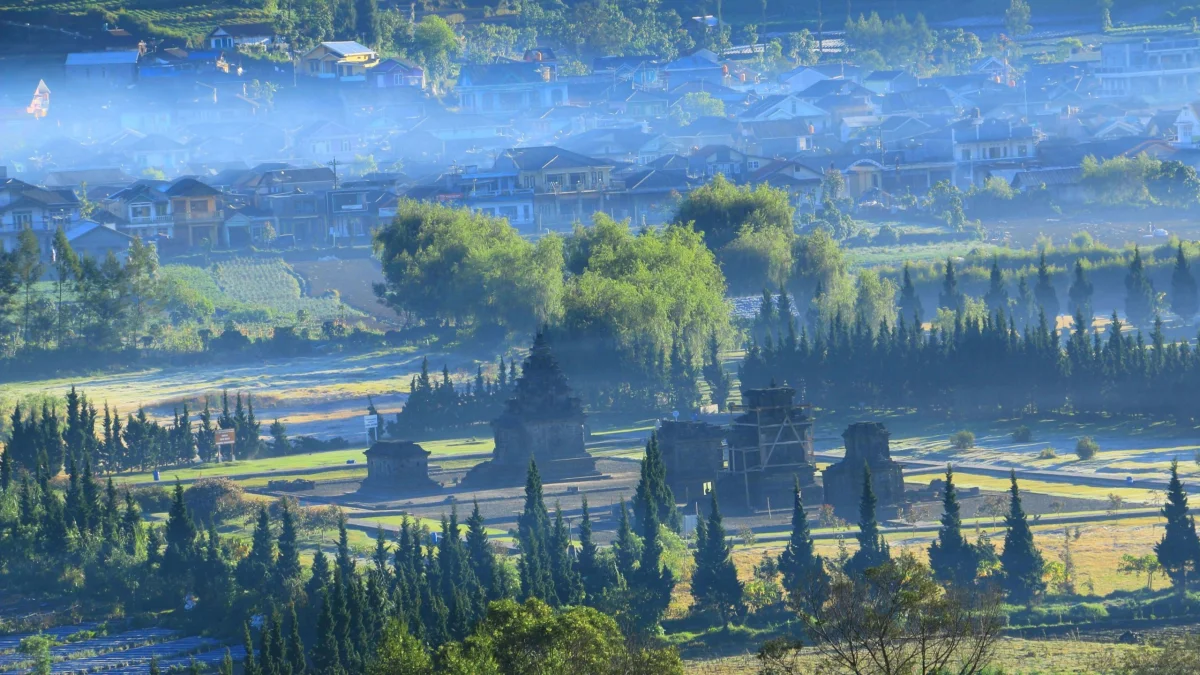
There is a specific kind of magic that happens in Central Java during the fleeting moments of the "Golden Hour." It is a time when the harsh tropical sun softens into a palette of amber, honey, and violet, turning the landscape into a living gallery. For a photographer, these moments are the ultimate reward for a 3:00 AM wakeup call or a long trek through muddy trails.
Central Java is a land defined by its layers of history, layers of volcanic ash, and layers of mist. To truly capture its essence, one must look beyond the typical tourist snapshots and seek the quiet dialogue between light and land. Here is a deep dive into the most photogenic spots in the region and the professional secrets to capturing them.
1. Borobudur: A Spiritual Symphony at Dawn
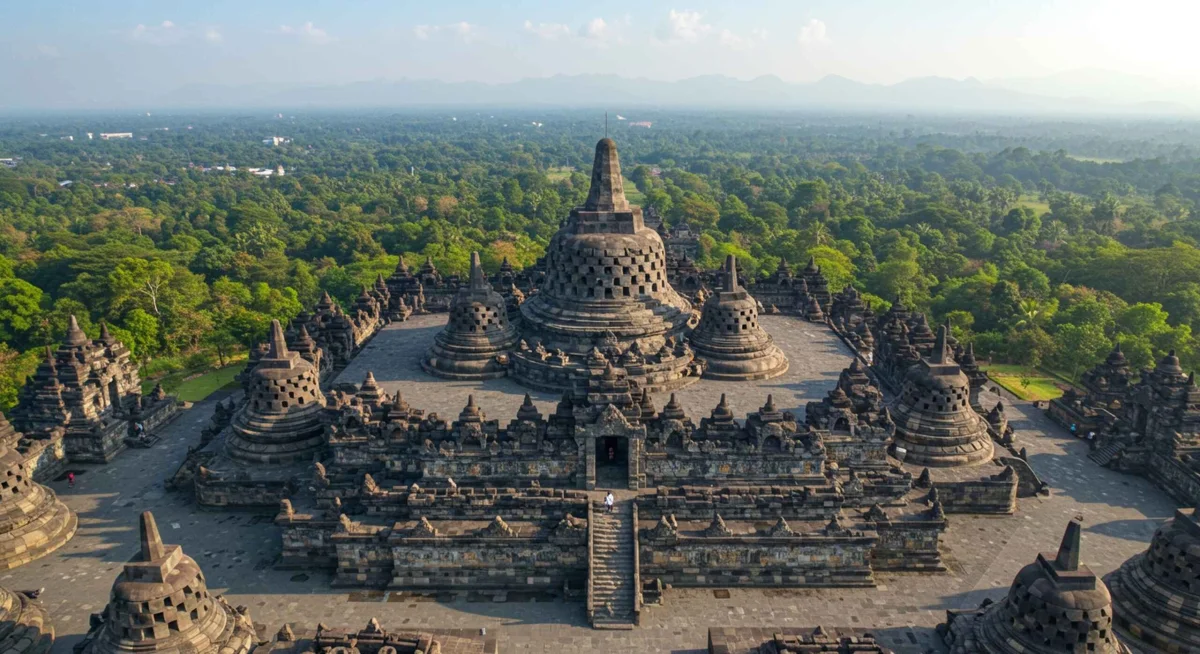
Borobudur is more than just the world’s largest Buddhist temple; it is a giant stone clock designed to interact with the sun. While thousands visit the monument itself, the truly professional shots are often taken from the surrounding ridges.
- The Narrative: At dawn, the Kedu Valley acts as a natural theater. As the sun rises, it slowly burns through the thick morning fog, revealing the temple's bellshaped stupas one by one. It is a scene that feels like it hasn’t changed in a thousand years.
- Professional Insight: Head to Punthuk Setumbu or the Dagi Abhinaya hill. Use a long focal length (100mm to 400mm) to compress the distance between the temple and the towering volcanoesMerapi and Merbabuin the background. This compression creates a sense of scale that feels both epic and intimate. Look for the "God Rays" as the light filters through the palm trees in the valley below.
2. The Selogriyo Rice Terraces: Nature’s Living Geometry
While many travelers flock to Bali for rice terraces, the slopes of Mount Sumbing in Central Java offer something far more authentic and serene. The walk to the 8th century Selogriyo Temple is a journey through a literal amphitheater of emerald green paddies.
- The Narrative: This is "Slow Travel" at its finest. The terraces here follow the natural curves of the hills, creating a mesmerizing pattern of leading lines. In the late afternoon, the water in the paddies acts as a series of mirrors, catching the warm glow of the descending sun.
- Professional Insight: Timing is everything. Arrive around 3:30 PM to scout your location. Look for "Human Interest" elements: a local farmer heading home or a child playing on the path to give your landscape a soul. Use a wideangle lens (16mm to 35mm) to capture the vastness of the curves, and stop your aperture down to f/11 to ensure every blade of grass is sharp from foreground to background.
3. The Dieng Plateau: A Mythical Highland Canvas
Known as the "Abode of the Gods," the Dieng Plateau is a highaltitude volcanic plain where the air is thin and the light is exceptionally crisp. The landscape is a surreal mix of ancient Hindu temples, bubbling mud pots, and multicolored lakes.
- The Narrative: The highlight here is the "Golden Sunrise" from Mount Sikunir. As you stand above the clouds, the sky transitions from a deep indigo to a fiery orangered that seems to set the horizon on fire.
- Professional Insight: This is a high-contrast environment. To avoid "blownout" skies or pitchblack shadows, shoot in Bracketed Exposure (taking 3 to 5 shots at different brightness levels) and merge them later in postprocessing. Also, don't forget the Telaga Warna (Turquoise Lake). View it from the Batu Pandang Ratapan Angin cliffs during the midmorning for the most vibrant water colors.
4. Mount Merapi: The Majesty of the Ring of Fire
Mount Merapi is perhaps the most iconic silhouette in Indonesia. It is a mountain that demands respect, and its beauty lies in its raw, rugged textures the result of centuries of volcanic activity.
- The Narrative: The Kaliadem area, specifically near the old bunker, offers a front row seat to the volcano's southern face. During the Golden Hour, the sun’s low angle hits the deep ravines and lava paths, creating a high-contrast "Chiaroscuro" effect that emphasizes the mountain's power.
- Professional Insight: Merapi is often shrouded in clouds by midday, so early morning or very late afternoon are your only windows. Use a Circular Polarizer filter to deepen the blue of the sky and remove any haze, making the white plume of steam from the crater stand out against the horizon.
5. Pantai Menganti: The New Zealand of Java
Hidden behind the karst hills of Kebumen, Pantai Menganti is a dramatic departure from the flat beaches of the north coast. Here, the Indian Ocean meets towering limestone cliffs draped in velvet green grass.
- The Narrative: This is arguably the best spot in Central Java to capture the sunset. From the "Tanjung Karang Bata" viewpoint, you can watch the sun sink directly into the sea. The contrast between the dark volcanic sand, the white surf, and the golden cliffs is a photographer’s dream.
- Professional Insight: This is the perfect place to practice Long Exposure photography. Mount your camera on a sturdy tripod and use a Neutral Density (ND) filter. A shutter speed of 2 to 10 seconds will turn the crashing waves into a soft, ethereal mist, giving your photo a calm, fine art quality that looks stunning in print.
A Note on Professional Etiquette and Gear
- The "Human" Element: Central Java is famous for its hospitality. If you see someone you’d like to include in your shot, a simple smile and a "Permisi" (Excuse me) go a long way. People are usually happy to be part of your story if you treat them with respect.
- Protect Your Gear: Volcanic dust and high humidity can be brutal on electronics. Always carry a microfiber cloth and a weathersealed bag. If you’ve been shooting near the ocean at Pantai Menganti, wipe down your tripod legs with fresh water to prevent salt corrosion.
- The Power of RAW: To truly do justice to the Golden Hour, you must shoot in RAW format. The colors of a Javanese sunset are so complex that a standard JPEG will often compress them, losing the subtle gradients of purple and gold that make these moments so special.
Final Thought: Capturing the Golden Hour in Central Java is a lesson in patience. You might wait for hours only for the clouds to hide the sun. But when it all aligns the mist, the light, and the ancient stone you aren't just taking a photo. You are preserving a fragment of the island's soul. Pack your bags, set your alarm, and let the light guide you.
Join the Conversation
0 thoughtful comments from our community
Leave a Comment
Share your experience or ask questions
No comments yet
Be the first to share your thoughts!